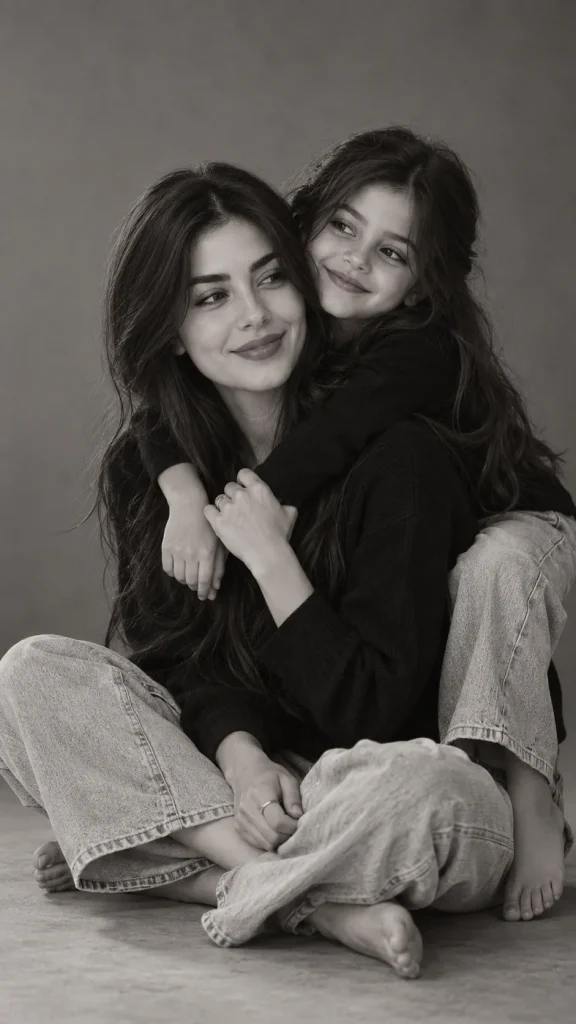
Use the provided reference photos as the primary identity reference for the father and child. Enable strict facial consistency/identity locking for both subjects. Precisely maintain the facial structure, proportions, eyes, nose, lips, jawline, cheeks, hairline, hairstyle, hair color, skin tone, apparent age, and recognizable characteristics of each person. Do not beautify, reshape, age, de-age, or blend their identities. Create a vertical 4:5 black-and-white fine art image of a father and child.Studio portrait. Frame them in an intimate close-up from the chest up. Position the father in the foreground, wearing a fitted plain black turtleneck, looking directly at the camera with a calm, serious expression. Position the child slightly behind and above him, wearing a crisp, loose white shirt, gently resting their head against the top or side of the father’s head.The child naturally drapes one arm over the father’s shoulder, while the father gently holds the child’s other forearm or hand near his chest, creating a warm, protective connection. Both faces remain fully visible, unobstructed, in sharp focus, and true to their respective reference photos.Use a seamless, pitch-black studio background; soft, directional key lighting from the upper-left front; subtle highlights on both faces; smooth shadow transitions; deep blacks; luminous skin tones; realistic hair and fabric textures; and elegant monochromatic tonal separation.Style: Timeless father-child portrait, high-end black-and-white editorial photography, intimate emotional connection, minimalist composition, 85mm portrait lens look, fine film grain, natural skin texture, sophisticated fine art lighting, highly detailed, 8K photorealistic.Avoid: identity changes, merged faces, altered facial features, modified hairstyles, age changes, artificial skin, distorted hands, extra fingers/arms, incorrect anatomy, facial obstructions, excessive editing, cartoon/CGI appearance, text, logos, or watermarks. Final result: 4:5 vertical aspect ratio..